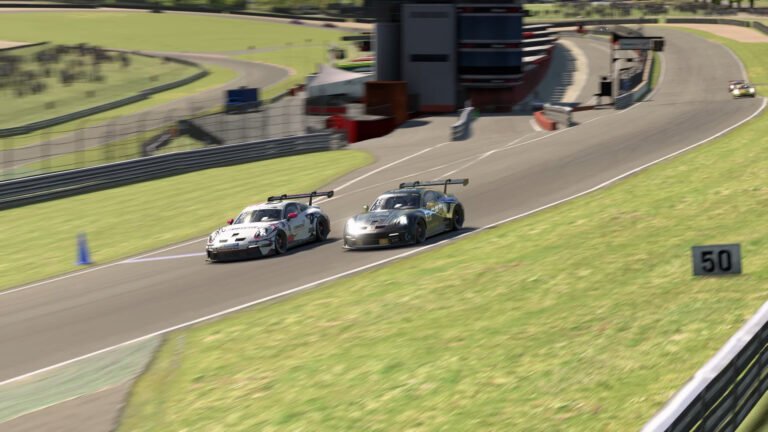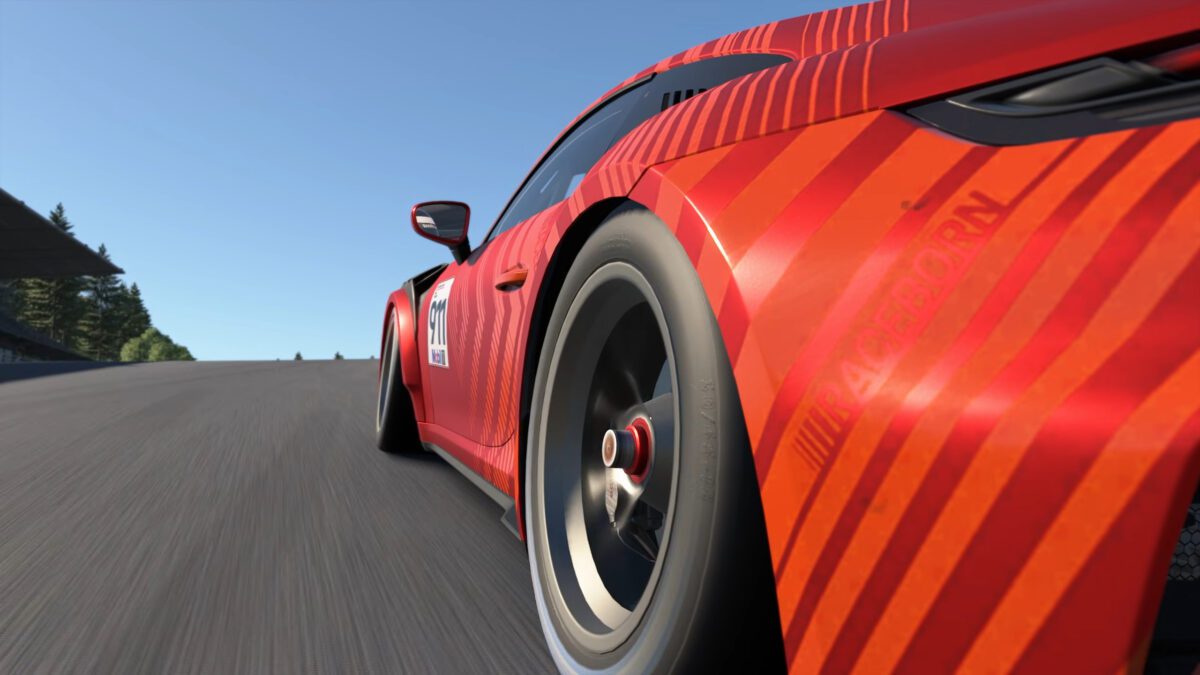
The Porsche 911 Setup iRacing school for the 992 generation is a masterclass in balancing “the pendulum.” Whether you are tuning the high-downforce 911 GT3 R (992) or the specialized 911 Cup (992.2), you are dealing with a rear-engine layout that rewards a very specific suspension philosophy. In 2026, the key to a fast Porsche setup is managing the car’s “pitch” to keep the aerodynamics sealed, while ensuring the rear axle has enough compliance to put all 520+ horsepower to the ground without cooking the tires.
Managing the Rake: The Aero Secret
In the Porsche 911 Setup iRacing workflow, “rake” (the height difference between the front and rear) is your most powerful aero tool. The 992 generation is designed to be “nose-down.” By lowering the front ride height and raising the rear, you create a vacuum effect under the floor that sucks the car to the track. For the GT3 R, this is essential for high-speed stability. However, on the 992.2 Cup car, too much rake can make the rear end “light” and nervous under heavy braking. The goal is to find the “sweet spot” where the car turns in sharply but doesn’t try to swap ends when you hit the brakes at 150 MPH.
Brake Bias and Differential: Stability is Speed
The Porsche 911 Setup iRacing settings for brake bias are often where races are won or lost. Because the engine weight is over the rear wheels, Porsches have incredible natural braking performance. For the 992.2 Cup car (which features a refined ABS in 2026), moving the bias rearward (often to 46-48%) can help the car rotate into the corner. However, this requires a very smooth foot to avoid rear-locking. Similarly, for the GT3 R, tuning the differential preload is vital; a higher preload will help stabilize the car during the transition from braking to acceleration, preventing that classic “mid-engine snap” that can catch out unwary drivers.
992 Setup School Quick-Tips:
- Spring Rates: Porsches generally like stiffer front springs to prevent the nose from “diving” too hard, which can stall the front aero.
- Anti-Roll Bars: If the car is “pushing” (understeering) mid-corner, try softening the front ARB or stiffening the rear to encourage rotation.
- Tire Pressures: The 992 generation is sensitive to pressure buildup. Monitor your “hot” pressures and try to keep them within the optimal window to maintain a consistent contact patch over a long stint.
Precision Over Power
Ultimately, a winning Porsche 911 Setup iRacing configuration is about confidence. A car that is theoretically “faster” on paper is useless if you can’t drive it consistently for 30 laps. Focus on making the car’s movements predictable through your damper settings. Once the 992 feels settled over the curbs and stable under braking, you can begin trimming the wing and rake to find that final bit of pace. Tuning the 992 is an art form—master the balance, and the podium is yours.