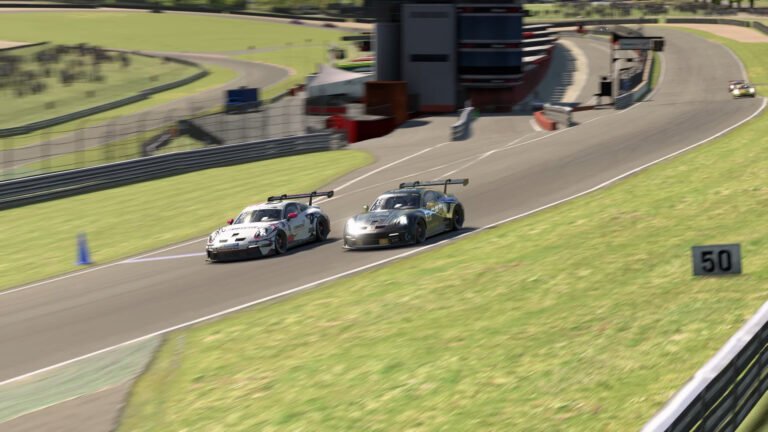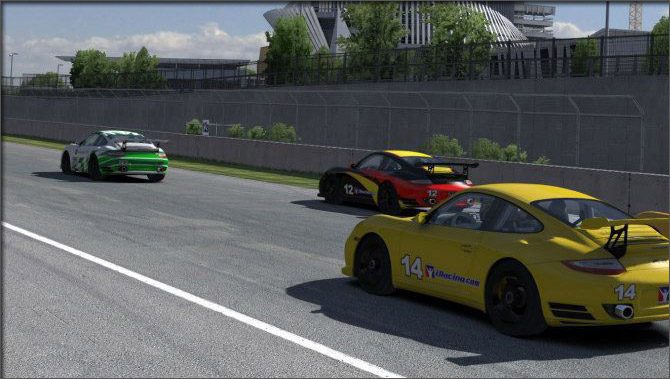
The RUF RT 12R iRacing setup screen is one of the most complex on the service, primarily because the four variants—Track, C-Spec, AWD, and RWD—require vastly different tuning philosophies. While they share the same DNA, the way you manage their suspension and aerodynamics depends entirely on whether you’re racing in a high-downforce GT3 field or a low-grip cup series. Tuning the RUF is about stabilizing the “pendulum” of the rear-engine layout without killing the car’s natural ability to rotate.
Stabilizing the Rear: Camber and Springs
One of the most critical adjustments for any RUF RT 12R iRacing variant is rear camber and spring stiffness. Because the engine sits over the rear axle, the rear tires are under immense load. To prevent the car from “squatting” too much and losing front-end grip, you’ll often want to run stiffer rear springs than you would on a front-engine car. Additionally, negative rear camber is vital for maintaining a contact patch during hard cornering. However, too much camber can reduce your straight-line traction, making the 730hp AWD and RWD street versions difficult to launch out of slow corners.
Differential and Aero: The Track vs. C-Spec
The RUF RT 12R iRacing Track version utilizes a sophisticated aerodynamic package that allows for significant rear wing adjustment. For high-speed tracks like Spa, increasing the wing can help stabilize the car through Blanchimont, but at the cost of top-end speed. In contrast, the C-Spec has limited aero, meaning you must find your stability through mechanical grip. This is where differential tuning becomes your best friend. A higher locking percentage on the differential will help keep the rear end from “stepping out” under power, providing a more predictable exit for the high-torque flat-six.
RUF Setup Quick-Tips:
- Brake Bias: This is your primary safety net. Start with a forward bias (54-56%) to prevent rear-locking spins. As you gain confidence with the car’s weight transfer, you can move it rearward to help the car rotate into the apex.
- Dampers (Shocks): The RUF is sensitive to mid-corner bumps. Softening the rear low-speed rebound can help keep the tires planted on exit, especially on undulating tracks like Bathurst.
- Fuel Load: The RUF is already rear-heavy. Adding a full tank of fuel will further exaggerate the “pendulum” effect. Run only as much fuel as needed for your session to keep the car’s balance as neutral as possible.
The AWD Traction Secret
If you are tuning the RUF RT 12R iRacing AWD variant, the goal is to manage “power understeer.” Because all four wheels are driving, the front tires can sometimes lose their “bite” if you apply full power too early. Look at your front spring rates; softening the front slightly can help the nose “dive” on entry, providing more turn-in grip. Once the car is rotated, the AWD system will do the rest, allowing you to rocket out of the corner. Mastery of the RUF setup is about respecting the engine’s position while using the suspension to compensate for its weight. Find your balance, and the RUF will become an extension of your hands.
Building a Winning Platform
Ultimately, a winning RUF RT 12R iRacing setup is one that you can drive consistently for an entire race stint. A car that is “on the nose” for one qualifying lap will often be a nightmare to drive as the rear tires begin to wear. Focus on creating a stable mechanical platform that allows for predictable weight transfer. Once the car feels settled, use small aerodynamic and differential tweaks to find those final tenths. The RUF is a precision instrument—tune it with care, and it will reward you with unrivaled speed.