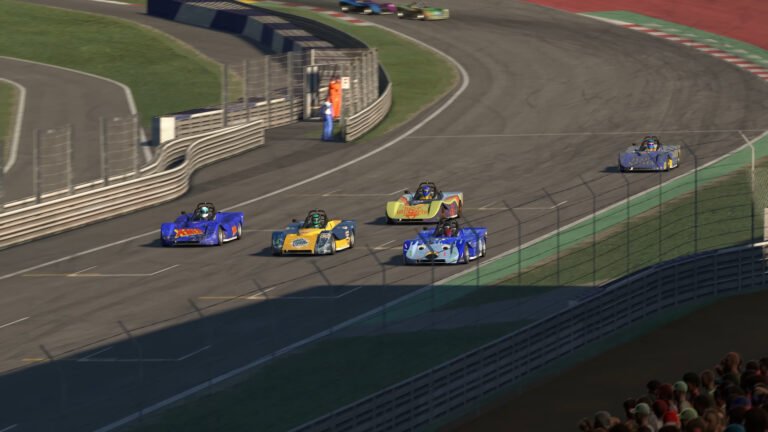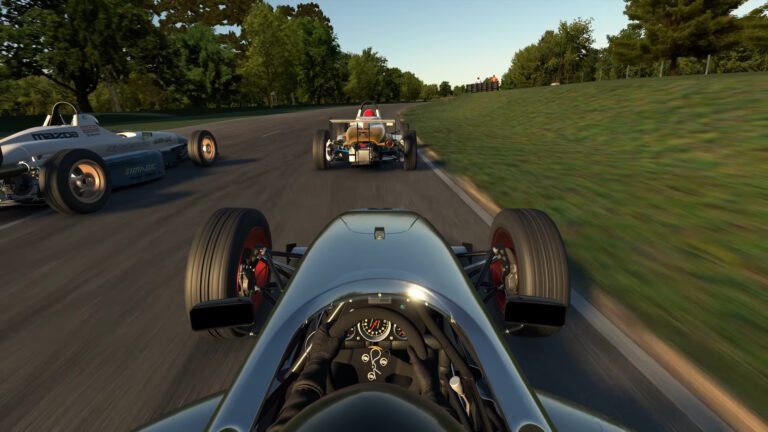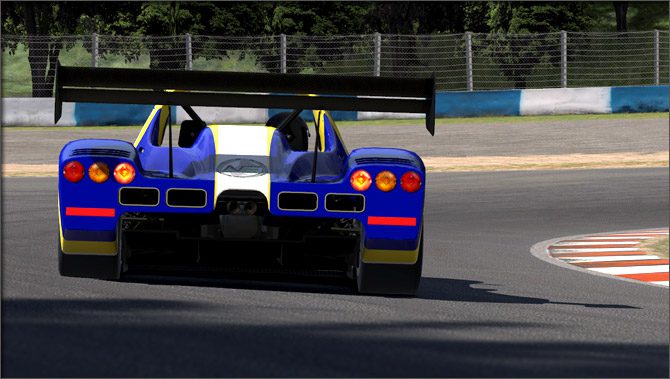
The Radical SR8 iRacing setup screen is where you tame the “screamer.” Because of its ultra-short wheelbase and high-downforce profile, the SR8 is notoriously sensitive to weight transfer. A setup that works at a flat circuit like Silverstone will often be undriveable at a bumpy track like Sebring or Oulton Park. To find the ultimate pace, you must move beyond basic wing adjustments and focus on the interplay between heave springs, damper rebound, and brake bias to keep the chassis stable under the V8’s aggressive power delivery.
Managing the Pitch: Heave Springs and Rake
The most critical adjustment for the Radical SR8 iRacing chassis is controlling the pitch. Because the car is so light, heavy braking causes the nose to dive aggressively, which can “stall” the front splitter or cause the rear to go light and snap. Stiffening the front heave spring (third element) is the best way to support the car under braking without making the corner springs too stiff for the bumps. This allows you to run a lower front ride height, creating a “rake” that helps the car turn in while ensuring the floor doesn’t slam into the track when you hit the anchors.
Damping the Snap: Rebound is Key
If you are struggling with the Radical SR8 iRacing’s tendency to snap-oversteer on corner entry, look at your rear rebound damping. When you release the brakes and turn in, the rear of the car wants to “pop” up as the weight shifts forward. By increasing rear low-speed rebound damping (lower numerical values in the iRacing garage), you slow down that expansion, keeping the rear tires pressed into the track for a fraction of a second longer. This “lazy” weight transfer makes the car much more predictable and allows you to be more aggressive with your turn-in speed.
Essential Tuning Tweaks:
- Brake Bias: The default bias is often too far rearward for most drivers. Moving it forward (to 54% or 56%) will stabilize the car during the “Brake-Then-Turn” phase, preventing the rear wheels from locking and initiating a spin.
- Anti-Roll Bars (ARB): If the car feels sluggish in chicanes, stiffen the front ARB. If it understeers too much mid-corner, soften the front or stiffen the rear. However, be careful—a rear ARB that is too stiff will make the SR8 extremely “pointy” and difficult to handle on exit.
- Tire Pressures: The SR8 is very sensitive to pressure. Aim for a “hot” pressure of roughly 23-24 psi. If your pressures are too high, the car will feel like it’s skating on ice; too low, and the sidewalls will roll, making the steering feel vague.
The Differential and Power Delivery
The Radical SR8 iRacing utilizes a plate-style limited-slip differential. If you find the car is spinning the inside rear tire on exit, you need more “locking” on power. Conversely, if the car refuses to turn while you are on the throttle (on-power understeer), reducing the locking effect will allow the wheels to rotate at different speeds, helping the car rotate. Balancing the diff is a fine art; it needs to be tight enough to put the V8’s power down but loose enough to let the car dance through the technical sectors.
Building a Balanced Platform
Ultimately, a winning Radical SR8 iRacing setup is about compromise. You want a car that is soft enough to absorb the curbs but stiff enough to keep the aerodynamic platform stable at 150 MPH. Start by getting your ride heights and rake sorted, then use the dampers to fine-tune the “feel” of the weight transfer. Once you have a car that doesn’t snap on entry, you can start trimming the wings to find that top-end speed. A stable SR8 is a fast SR8—find the balance, and the 10,000 RPM lap times will follow.