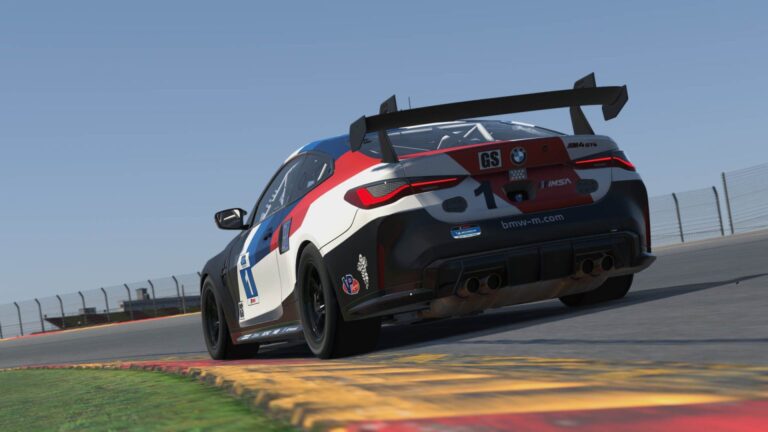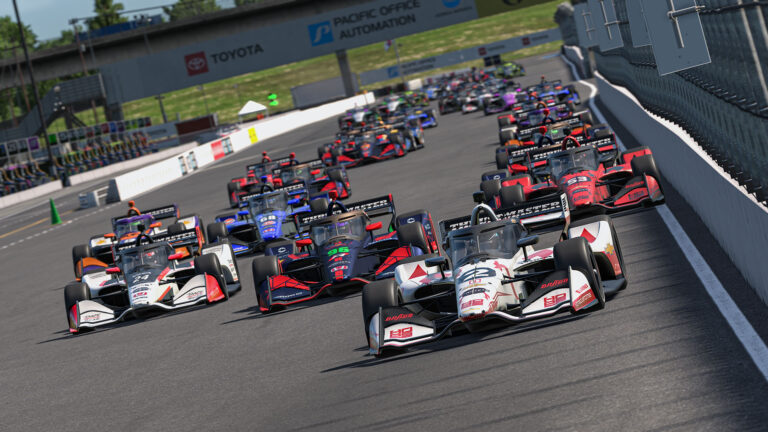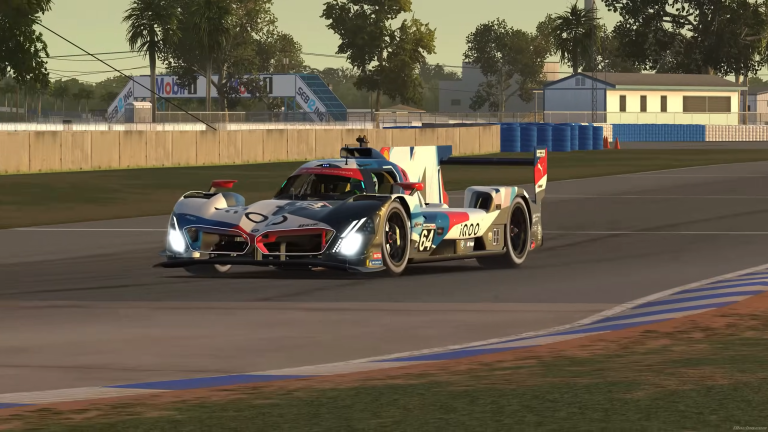
In iRacing GT Sprint and IMSA races, the pit stop is the single biggest strategic lever you have. Most races run between 40 and 45 minutes. Most drivers know that pitting late is usually the correct call. The iRacing pit window strategy debate goes deeper than you might expect. The community has plenty to say about when early pitting actually makes sense.
Also See
➡️ iRacing Full-Course Yellow: Should iRacing Add FCY or Slow Zones?
The Case for Pitting Late
The case for pitting late is straightforward. Every extra lap you run before pitting is a lap of fuel burn. Because fuel adds weight, carrying it longer means you run slower lap times throughout the stint. Pitting at the end of the window means you enter pit lane with minimum fuel weight. You then top off the tank or swap tires, and rejoin with the most laps left to run at peak pace.
Early pitting also puts you back in traffic. Most of your competitors are still on track when you leave pit lane. That means you rejoin in the middle of the field and have to work back through cars you already passed. In a 40-minute race, the fuel window might only be ten or twelve laps wide. Giving up fuel economy and running through traffic rarely pays off.
One iRacer summarized the community consensus well: “Right at the beginning, probably not. You are making your car heavier and putting yourself into traffic which is unlikely to yield anything positive.”
When Early Pitting Actually Works
That said, there are real situations where pitting early is the correct call. Damage repair is the most obvious one. If you take contact in the first ten minutes and your car is handling badly, waiting costs you laps at a deficit. Pulling in early to fix the damage and rejoining with a clean car is almost always the right move. You might give up track position temporarily, but a repaired car is worth that trade.
Traffic management is the second valid reason. In prototype classes like LMP2 or GTP, getting stuck behind slower traffic can cost more time than an early pit cycle does. Overtaking high-downforce cars is harder than in GT machinery. Time lost behind a slower driver in the wrong split can be severe. If pitting early means rejoining on an empty section of track, and you can run flat out for twenty minutes, the math sometimes works in your favor.
Several iRacers made this point specifically. One put it this way: “Sometimes it works if you are much faster than the people ahead. It helps because you don’t have to fight or overtake them if you can get free track ahead of you to go as fast as you can.” In that scenario, the clean-air benefit outweighs the fuel weight penalty. This is particularly true in the second half of the race, when the field has spread out.
A third case is when you qualify poorly and you are clearly faster than the cars around you. Some drivers explicitly use early pitting as a position tool in that situation: “If I qualify badly and I am faster than the cars ahead I always pit as early as I can. If I am running near the front I go as late as I can.” The result is two distinct strategic profiles for the same race depending on where you start.
IMSA Tire Rules Add a Layer
IMSA in iRacing introduces an extra complication: tire compounds. Because the series uses different tire specifications for different stints, your pit window decision has to account for which compound you are switching to. It also matters how long that compound takes to reach operating temperature. A late pit on a compound with a long warmup window can erase the advantage you were counting on.
This is where IMSA strategy becomes more interesting than standard GT Sprint racing. A well-timed early pit on a compound that comes in quickly can outperform a late pit on a compound with a longer warmup requirement. This depends on how many laps remain when you rejoin. The compound variable is something to factor in before the race starts, not after you commit to a pit strategy.
Dodging LMP2 traffic also adds a layer specific to IMSA. In lower-participation weeks, the prototype split can include slower drivers. In those cases, predicting when slower prototypes will be in your way mid-race can influence the optimal pit timing. Getting out ahead of a cluster of slow LMP2s in a tricky section of the track can be worth a lap or two of fuel economy.
The Undercut in Short Races
The undercut gets talked about constantly in racing, but it is genuinely harder to execute in short iRacing sprint races than in longer real-world events. The reason is simple: your rival has to pit within a few laps of you for the undercut to work. In a 40-minute window where the pit delta might be 30 to 45 seconds, the math is tight. Gaining enough of a pace advantage to overcome that gap requires you to be meaningfully faster on fresher tires.
In most GT Sprint scenarios, a one-lap undercut either works cleanly or not at all. The gap is often too close to call in real time. That is why most experienced iRacers default to the same approach: pit late, avoid unnecessary traffic exposure, and use the undercut only when there is a specific reason for it. A rival who damages their car, a timing opportunity created by traffic bunching, or a clear pace delta are the triggers that make it worth attempting.
Planning matters here too. As one iRacer put it: “I always have a track map and test how long a pit cycle takes so I can plan the pit perfectly to come out with no traffic. Usually it only works within 5 laps of me pitting.” That precision is what separates a successful undercut from a gamble. Knowing your pit delta to the second, and which part of the track gives you clean air on exit, makes all the difference.
The default answer is still late pitting. However, knowing when to break from the default makes a real difference. That distinction separates drivers who survive a race from the ones who actually win it.