You know the feeling. Work was rough, something went sideways, and your head is still running through all of it on the drive home. You sit down at your rig, strap on the headset, and within two laps of a clean stint, you have completely forgotten what was bothering you. That is not an accident.
Also See
➡️ The Psychology of iRacing: A Deep Dive Into the Mindset of Virtual Racing
For a lot of iRacers, sim racing is the best mental reset they have found. Not because it is mindless. Quite the opposite. The reason iRacing works so well as a mental escape is precisely because it demands everything you have got. That connection between sim racing mental health benefits and total concentration is what this is really about.

The Mental Load iRacing Actually Demands
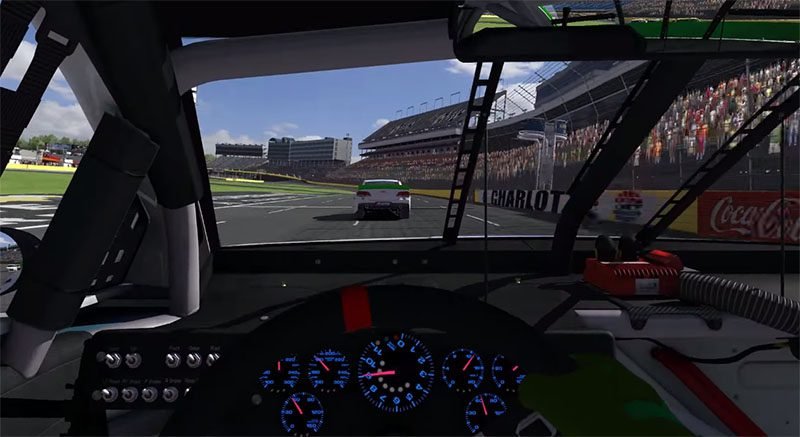
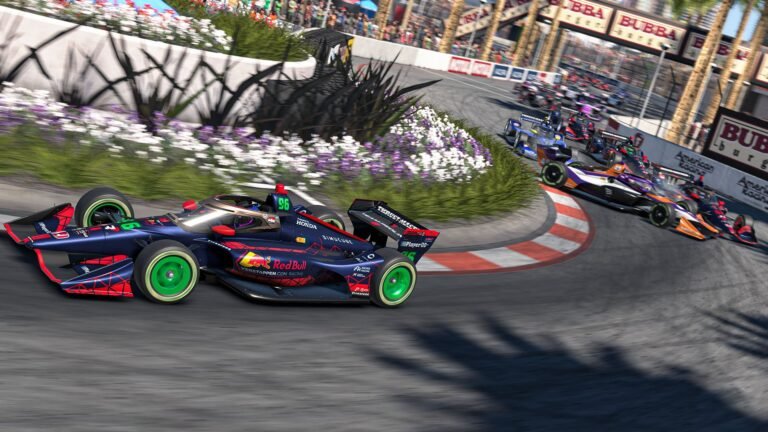
Run a competitive stint and count what your brain is tracking at any given moment. Tire temps and degradation. Brake markers. The gap to the car ahead and what is happening behind you in the mirrors. Spotter calls coming in your ears. Fuel strategy if the race distance requires a stop. And the constant micro-corrections that keep you on the limit without going over.
That is not passive entertainment. That is total cognitive engagement. There is no bandwidth left over to replay the meeting that went sideways this afternoon, because your brain is fully allocated somewhere else.
Competitive sim racing requires the same kind of focused attention as chess, surgery, or performing live music. You cannot be partially present. The moment your mind wanders, your lap time shows it. In a close race, your position does too.
Flow State and Sim Racing Mental Health
Psychologist Mihaly Csikszentmihalyi spent decades studying what he called flow, the mental state where you are so absorbed in a challenging activity that self-consciousness disappears and time distorts. Athletes describe it. Musicians describe it. Surgeons describe it.
iRacers describe it too, even if they just call it being in the zone.
Flow is not relaxation in the passive sense. It is a state of high-focus, high-engagement where the challenge of the task and your skill level are matched closely enough that you are fully stretched but not overwhelmed. The psychological effect afterward is well documented: lower stress, better mood, and a genuine sense of having recharged rather than just passed time.
Sim racing mental health benefits map directly onto this. The skills required to run competitive laps in iRacing scale with your level in a way that keeps you right at that edge. The faster you get, the more you pick up on, and the more demanding those clean laps become. You never age out of the challenge. There is always more lap time to find, always a faster car class to try, always a tighter field to race against.
Why Sim Racing Works When Other Things Do Not
Here is the honest comparison. After a rough day, there are a few things most people reach for. TV. Phone scrolling. Maybe a workout. Some of those help. But passive media, whether it is a series, a social feed, or short-form video, does not require enough of your brain to actually displace the stress loop.
Your mind wanders back to the problem. The show plays, the scroll happens, but the background chatter in your head does not stop.
iRacing stops it, because the simulation does not give you a choice. Miss a braking point and you are spinning into the wall. Lose focus on the chicane entry and you are getting a contact penalty. Your attention is not requested. It is required.
There is a meaningful difference between activities that give your brain somewhere to drift back to and activities that will not let it. Sim racing is firmly in the second category. That is why so many iRacers reach for it on the hard days rather than just the easy ones.
The Physical Side Nobody Talks About
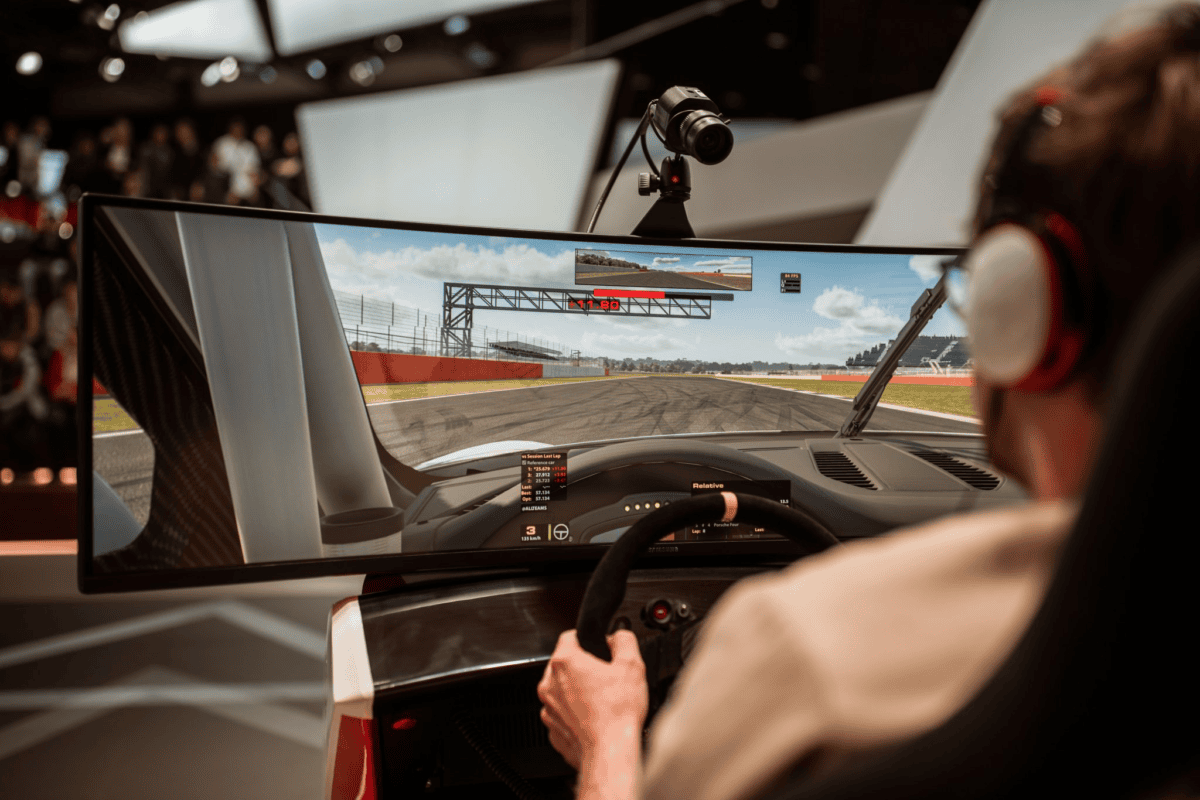
There is a body component that does not get mentioned enough. If you are running a proper rig with a direct drive wheel and load cell brakes, you are physically engaged too. The force feedback communicates through your hands, your feet are working the pedals with real pressure, and your core is braced through the corners.
It is not a workout in the traditional sense, but it is not nothing either. The physical engagement reinforces the mental one, pulling your nervous system into the task rather than leaving it to idle in whatever stress response it was running when you sat down.
A lot of iRacers report that a good session leaves them calmer and more settled than when they started. Not tired in the depleted sense, but quieted. That is a real effect, and it is worth paying attention to, especially if you have been treating sim racing purely as competitive hobby rather than a tool for how you feel the rest of the day.
Getting the Most Out of iRacing as a Mental Reset
If you want iRacing to work as a genuine mental reset, a few things help more than others.
Structured sessions work better than aimless practice laps. Pick a race, join a series event, or set a qualifying target. Anything with stakes keeps your focus engaged at the level that produces the real benefit. The competitive element matters. It is part of what makes the cognitive demand high enough to crowd out everything else.
Running familiar tracks tends to produce better flow states than learning new ones, at least when mental recovery is the goal. When you are mapping a new layout, part of your brain is doing spatial learning rather than pure performance work. When you know the track cold, you can work the limit instead of the map.
Give the session real time. Fifteen minutes in and you are still warming up. Thirty to forty-five minutes in and the focus has typically kicked in fully. Some of the best mental-reset sessions happen in the second half of a race, when the rhythm is locked and the racecraft becomes something closer to automatic.
And for what it is worth: the series you run matters less than the commitment level. A midfield battle in a C-class fixed-setup race is going to require just as much of you as a top-split D-class race. The difficulty scales to your level. Use that.
The Bottom Line
Nobody starts iRacing specifically because a study told them it is good for their mental health. They start because they love racing. But the people who stick with it figure something out quickly: it is one of the better tools available for clearing your head, and that is not separate from what makes it fun. The intensity is the point.
The concentration required to run competitive laps, the spotter communication, the racecraft, the car management, the micro-corrections at the limit, is the exact mechanism behind the benefit. You cannot be managing corner entry speeds and also be spiraling about what happened at 3 PM. The two cannot coexist in the same head at the same time.
Sim racing mental health benefits are a byproduct of a simulation demanding enough to require your whole brain for the duration. That is the whole story. Get in the car.