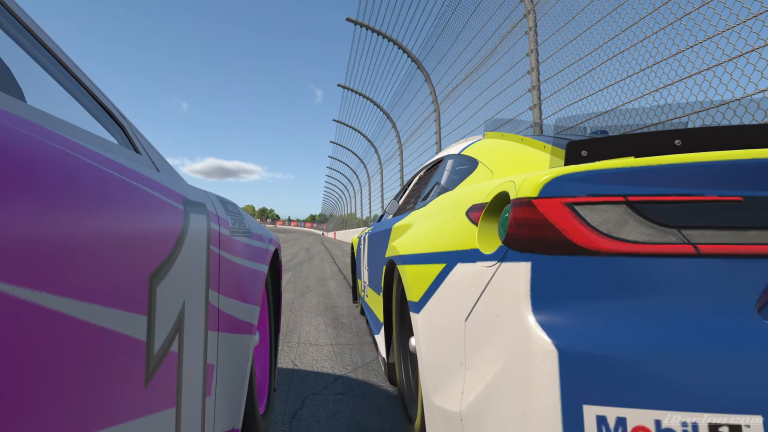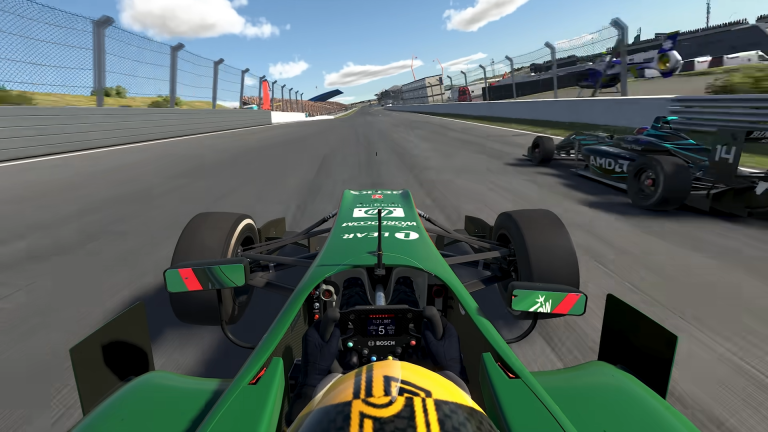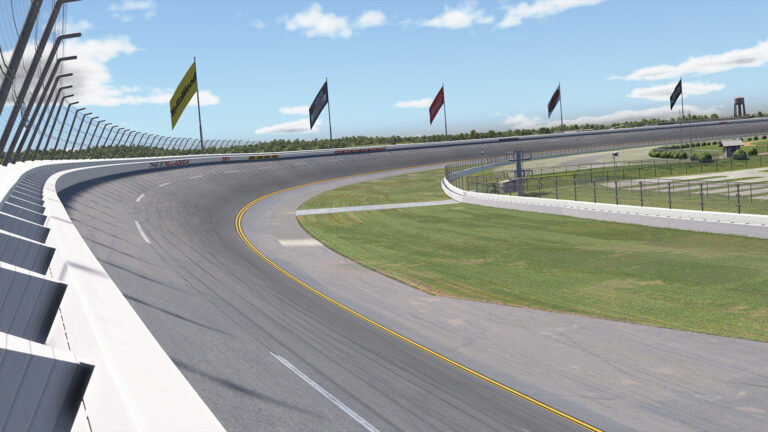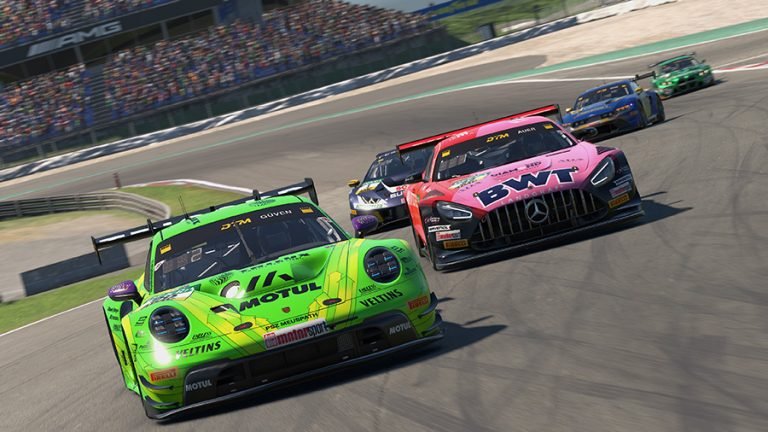
The moment rain falls in iRacing, a large portion of the field immediately loses time through the same set of habits. They brake at the same markers, use the same line, apply the same throttle aggression that worked in the dry. None of it works anymore. iRacing rain driving is a different set of skills entirely, and the drivers who adapt fastest are the ones who come out of the opening laps with a gap the dry-weather specialists spend the rest of the race trying to close. This is Driver School #11.
Also See
➡️ Driver School #10: Finding Time in Slow Corners
🏎️ Wet Weather Racing on Driver61
What Changes When the Rain Hits in iRacing
Rain fundamentally changes the grip profile of the track. In the dry, the racing line is the fastest path because it has rubber laid down from hundreds of laps. In the wet, that same rubber becomes a liability. Water sits on top of the embedded rubber and creates a film that dramatically reduces mechanical grip. The dry line is now the slipperiest surface on the track.
This reverses a lot of what you know. The areas toward the outside of the road that nobody drives through in the dry often have more grip because it is clean asphalt. The apex and braking zones become places to avoid under heavy inputs. The ideal line in the wet is usually wider, earlier, and deliberately off the rubber.
The other major change is braking distance. Wet stopping distances increase significantly in iRacing, sometimes by 20 to 40 percent depending on the car and tire compound. If you are using your dry braking markers, you are going to run wide. Every braking zone needs a new reference point set earlier than what you are used to.
iRacing Rain Driving Starts with Your Line Choice
If there is one thing that separates drivers in the opening laps of a rain race, it is line choice. The instinct to follow the rubber, to put the car exactly where it would go in the dry, is the first thing you have to override.
The wet-weather line in iRacing rain driving is typically wider and on cleaner asphalt. Rather than turning into the apex early and dragging the car across the rubber on the way out, you run a shallower entry that keeps the car on fresher asphalt toward the outside. The exit line also changes. You let the car run wider on exit because the grip you would normally rely on to bring it back is not there in the same way.
Hairpins and slow corners change the most. In the dry, a tight late apex rewards you with early throttle. In the wet, an aggressive late apex often puts you on slick rubber right at the moment you need to accelerate. A slightly earlier, rounder line through the same corner keeps you on better asphalt and makes the throttle application safer. The line feels wrong until you check the lap time and see it working.
Braking in the Wet: Where to Stop and How Much Earlier
The braking zone is where most wet-race incidents happen. Drivers arrive at corners carrying dry-weather expectations and run out of road. The fix is simple in principle but takes discipline: move your braking point earlier, and trail the brakes lighter.
How much earlier depends on the car. A heavy GT car might need 20 percent more braking distance in heavy rain. A lighter formula car with slick tires needs even more relative adjustment. The first few laps of any rain race are data collection. Brake early, find out where the car stops, then inch the reference point forward if there is margin.
The second part of wet braking is how you trail the pressure. In the dry, you can carry significant brake load into the corner to rotate the car. In the wet, that same loading will push the front past its limit. You still want some trailing brake for rotation, but the pressure has to come down considerably. A lighter, longer trail into the apex gives you rotation without overwhelming the front grip.
Never lock the fronts in the wet. A locked wheel in the dry is recoverable: you release, the tire spins up, grip returns. In the wet, a locked front creates a water film under the contact patch, and the tire does not re-engage quickly. What would be a brief correction in the dry becomes a long, slow understeer into the barriers.
The Throttle Technique That Makes iRacing Rain Driving Work
Throttle control is the biggest differentiator in iRacing rain driving. The cars that spin, oversteer, and tank-slap their way through wet laps almost always share one problem: the driver got on the gas too fast. Understanding the fundamentals of car control in iRacing applies to rain racing directly, and the margins are just tighter, and the consequences arrive faster.
In the wet, the rear tires have a fraction of the longitudinal grip they would have in the dry. Full throttle at the apex (the move that works well in a slow corner on a dry track) becomes an invitation for the rear to step out without warning. The fix is not to go slower. The fix is to get the throttle on earlier and build power progressively.
Progressive throttle in the wet means starting the application sooner than you would in the dry, but more gently. Instead of a hard punch at the apex, you are rolling on the power beginning slightly before the apex and reaching full throttle well after the car is fully straight. The result is more exit speed than you would expect, because you never break traction in the first place.
Higher gears also help in cars without electronics. In a naturally aspirated formula car or older GT machine, picking a gear higher than you would in the dry reduces torque at the rear wheels and makes the power curve more manageable. Paddling down to first gear at a hairpin and then trying to manage that torque in heavy rain is the fastest way to spin your way down the order.
Painted Surfaces, Curbs, and Standing Water
Three track surfaces can ruin a wet lap instantly if you do not treat them differently from the rest of the road: paint, kerbs, and standing water.
Paint, including the white lines at the pit entry, the start-finish markings, and the painted run-off arrows, becomes almost frictionless in the wet. Any significant steering angle or brake pressure over a painted surface in the rain risks immediate lock-up or snap oversteer. The approach is simple: cross paint lightly, and never during a heavy input.
Kerbs in the wet carry their own risks. The raised portion of a kerb unsettles a car in the dry, but in the wet, the flat painted top surface is nearly as slippery as paint. Running a wider line that avoids the kerb face entirely is usually faster anyway, since it keeps the suspension loaded and the car balanced through the apex.
Standing water is an extreme version of the same problem. If you see a sheet of water pooled across the racing line, drive around it, even if it means a slower path. A car aquaplaning through standing water has no grip whatsoever until the tires re-engage the asphalt. At race speed, that moment of zero grip is long enough to end your race.
Reading a Drying Track and Managing Changing Conditions
The most complex part of wet racing in iRacing is what happens when the rain stops and the track begins to dry. Grip levels change lap by lap, and the optimal line shifts with them.
As the track dries, the rubber on the racing line starts to offer more grip again. The transition is gradual. The inside of braking zones dries first because less water pools there. The exit edges of corners tend to stay wet longer, especially at the outside of the track where water drains slowly. The blend of wet and dry surfaces is different at every corner on every lap.
The best approach is to run a transitional line that tests the rubber each lap. Run just inside the rubber on corner entry and check whether the car responds cleanly. If it does, shift the line incrementally toward the rubber over the next few laps. If the front washes wide, back off and run wide for another lap before testing again. Chasing the rubber too aggressively before it has dried is faster in theory but produces the kind of spin that drops you from a good position to last place.
One useful reference is watching the cars ahead of you. If drivers on the racing line are staying stable and carrying speed, the rubber is probably offering grip. If they are sliding or running wide, stay wide for another lap. In racecraft terms, following a faster car through a drying corner is one of the safest ways to learn where the dry line has become safe again without risking your own race.
Building Your iRacing Rain Driving Practice Plan
The only way to build confidence in iRacing rain driving is to practice it deliberately, not to wait for a random rain race and try to adapt under pressure.
Find a track with a rain condition in iRacing and run solo practice sessions. Start at 70 percent pace and map out where the grip is. Find your braking references. Identify the line that works. Then build speed gradually, noting the exact corners where grip runs out before you find a pace you can sustain cleanly. The goal is to build a mental map of the wet track before you ever need to execute it under race pressure.
Check the steering input and grip management article for more on how to manage wheel angle in low-grip conditions. The principles from dry-weather driving apply in the wet, but the margins are narrower and the penalties for exceeding them arrive immediately.
One effective drill: run the dry line deliberately for five laps and record the time. Then switch to the wet-weather line for five more. The wet line is almost always faster by a bigger margin than most drivers expect, and seeing that delta in the data is one of the most effective ways to commit to the correct line under pressure when a safety car comes in and you have to trust a path that feels unnatural.