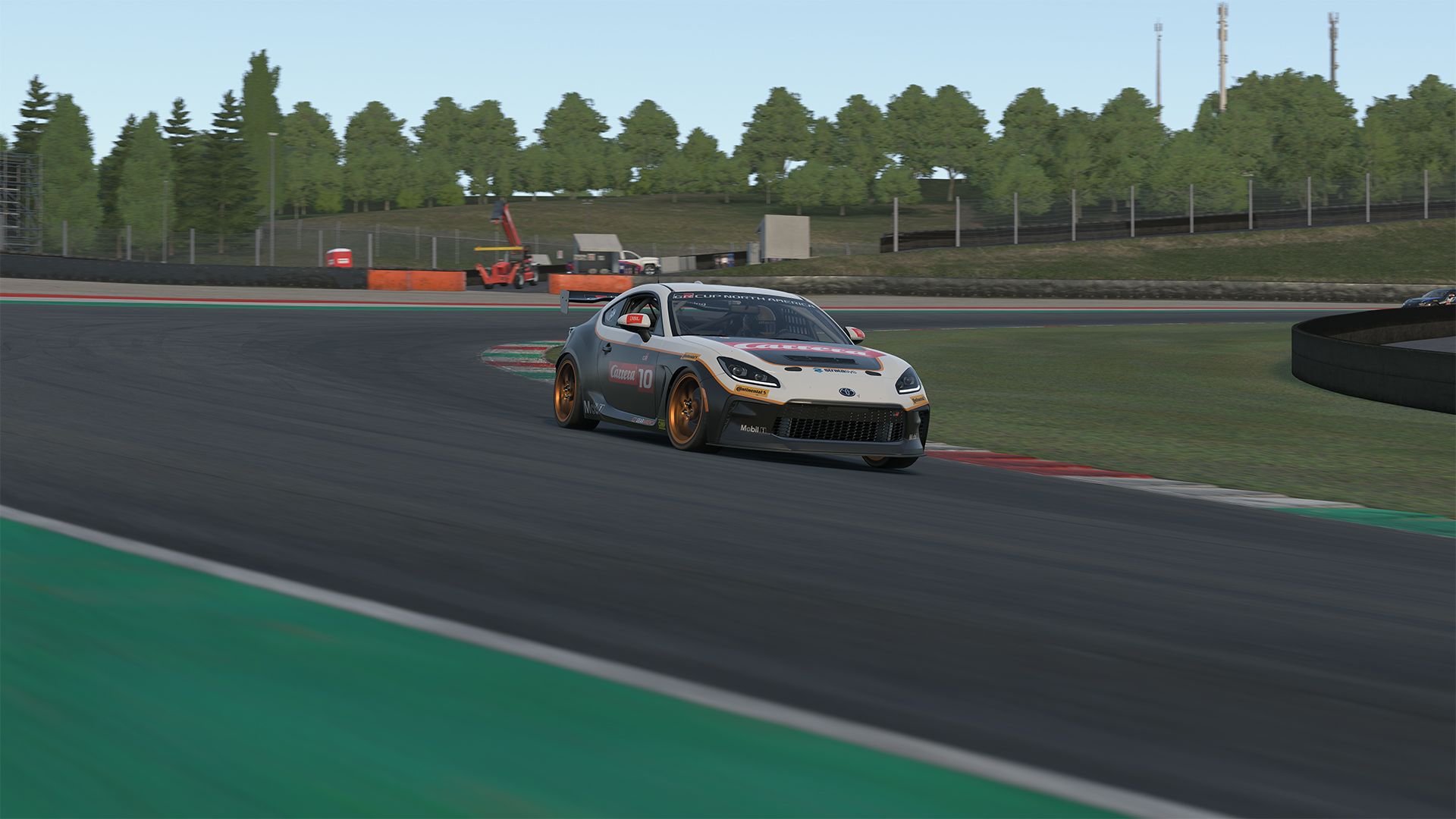
The Toyota GR86 might be the most universally liked car in iRacing. From the rookie ranks to the upper C license, drivers keep coming back to it. But if you have been racing the GR86 for a while and want a real competitive step up, the series options run thin fast. That is the gap the iRacing community is pushing hard to close.
Also See
➡️ Toyota GR86: A Beginner’s Guide to iRacing’s Best Starter Car
A late April discussion on r/iRacing collected 65 upvotes and 58 comments from drivers making the case for a GR86 series at B license or above, with longer races and a genuine step up in competition level. The response made clear this is not a niche request. It is one of the more consistent asks in the community right now, and it is worth taking seriously.
How Popular Is the GR86 Really
The GR86 occupies a unique position in iRacing’s car lineup. It is cheap to run, genuinely rewarding to drive, and approachable enough for drivers who are still building their skills. At the same time, mastering it takes real time. The car rewards smooth inputs and punishes laziness under braking, which makes it a good teacher for fundamentals that transfer across nearly everything else in the sim.
iRacers consistently recommend the GR86 as a learning car that does not feel like training wheels. It sits in a sweet spot where beginners can place the car on track and experienced drivers can still find meaningful pace to chase. As a result, a large and active pool of competitors races at all levels, which is exactly the environment you want for a healthy series. Very few cars in iRacing generate that kind of cross-level enthusiasm.
The demand shows up in participation numbers too. The GR86 Touring Car Series consistently fields competitive grids, and the car appears regularly in hosted events and league racing outside the official schedule. Because the GR86 is included in the base iRacing subscription, the barrier to entry is essentially zero. That gives it a broader driver base than almost any other car on the platform.
The Current Series Structure and Where It Breaks Down
The main official home for the GR86 is the Touring Car Series, which runs at D and C license. Races are short, usually in the 20 to 30 minute range, and the competition is genuine. The problem is there is nowhere to go from there within the same car.
When drivers reach B license and want to keep developing in the GR86, the path ends. iRacing’s promotion ladder steers them toward GT4, GT3, or the Porsche Cup, each of which involves buying a new car, learning a new handling model, and competing in a different community. If you have become genuinely fast in the GR86 and want to test that speed in a longer, harder race with stronger competition, the official series structure simply does not offer that option.
Several community members noted this directly in the thread. One pointed out that the GR86 is one of the few popular cars that peaks out at D and C license without any pathway to a higher-competition series in the same platform. Another noted that the car’s popularity makes the gap even more noticeable, because there are clearly enough drivers to fill a higher-tier series if iRacing chose to schedule one. The infrastructure and the driver base already exist. The scheduling decision is what is missing.
What the Community Actually Wants
The community request is specific. Drivers are not asking for a GR86 world championship. They are asking for a single dedicated series at B license with races in the 40 to 60 minute range. The longer format matters because it introduces proper pit strategy, tire management, and traffic reading, elements that the short-race format does not require at the same level. A 25-minute race rewards raw pace. A 50-minute race rewards a broader set of skills.
There is also a strong preference for fixed setups. The GR86 is already popular in fixed-setup racing because it removes the setup arms race and keeps the grid close. A B-license series with a fixed setup would allow drivers who are good at sim racing fundamentals to compete meaningfully without spending hours building setups before a race week starts. That accessibility is part of what makes the GR86 work as a community car.
The thread produced a consistent underlying message: drivers want a reason to keep investing in the GR86 at a higher level rather than being forced to move on to different machinery entirely. As one iRacer put it, the GR86 should have a series for drivers who want to be fast in that car, not just for drivers who are passing through on the way to something else. That distinction matters for building a real community around the platform.
How Other Cars Handled Progression
The closest comparison is the Mazda MX-5. iRacing has built a genuine progression path around the MX-5 Cup, running it from the rookie level through a dedicated fixed-setup series and into a Mazda-sponsored pro competition. The result is a car with a long competitive life in the sim and a community built around improving in one platform rather than constantly jumping to new machinery. Drivers who commit to the MX-5 know there is somewhere to go with their progress.
The Porsche Cup series follows similar logic. Porsche runs dedicated iRacing series that give the 911 GT3 Cup a competitive home at multiple license tiers, which means drivers can stay in the car as they progress rather than treating it as a temporary stepping stone. The Porsche community in iRacing is large and active partly because the structured path exists. You can get better in the car and the series grows with you.
The GR86 has no equivalent path. It is popular enough to justify one, and the car quality is already there. Community members who pointed to the MX-5 model in the thread were direct about it: the GR86 deserves the same treatment. However, unlike the MX-5 and Porsche programs, which had manufacturer partnerships driving the series structure, the GR86 path would need iRacing to build it proactively.
What an Advanced GR86 Series Could Look Like
A B-license GR86 series would not require iRacing to build new content or acquire new real-world partnerships. The car exists, the tracks exist, and the driver base exists. The primary work is scheduling, promotion, and committing to fixed or open setups. All of that is well within iRacing’s routine series-building process.
Based on the thread feedback, fixed-setup is the preferred option. It keeps the racing close, prevents setup shops from becoming the dominant factor in race results, and levels the field in a way that rewards racecraft over resources. Race length in the 45 to 60 minute range would introduce strategic elements without demanding the kind of preparation time that longer endurance events require. That window is long enough to matter without being intimidating to drivers with limited weekly practice time.
Toyota’s relationship with iRacing already exists through existing collaborations and sponsorships across the platform. A higher-tier GR86 series with manufacturer backing would fit naturally into that partnership and give Toyota stronger visibility at the competitive end of iRacing’s content calendar. Additionally, it would give iRacing a clear answer when new subscribers ask where the GR86 path leads.
The demand is clearly there. The GR86 is one of the best cars in the sim, and the drivers who have committed to it deserve somewhere to go with that commitment. Whether iRacing acts on the community’s ask is the open question, but the message from 58 comments and counting is hard to ignore.