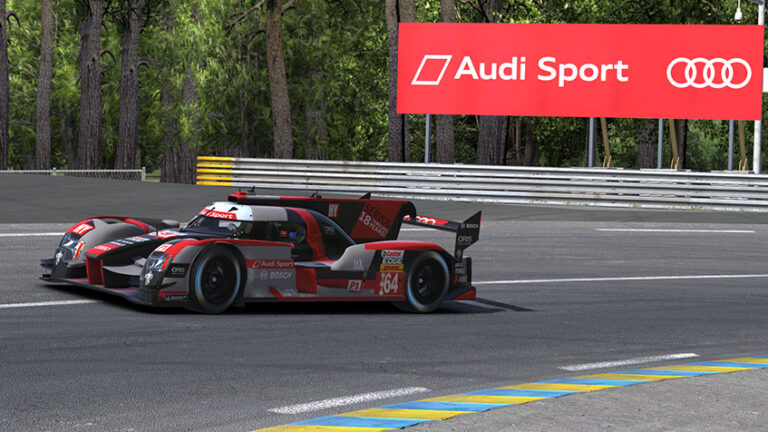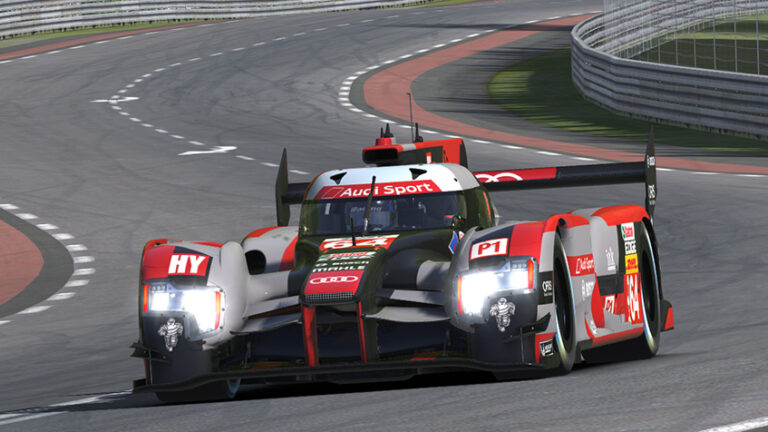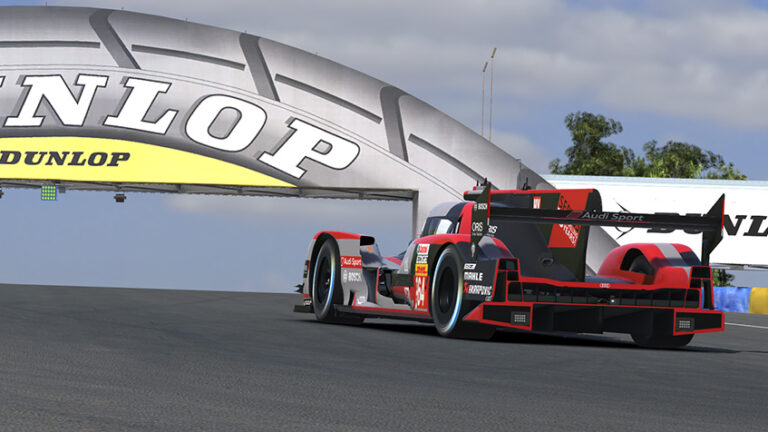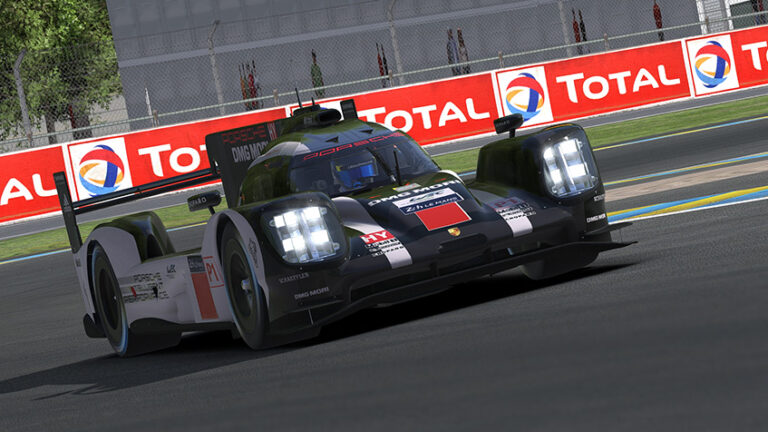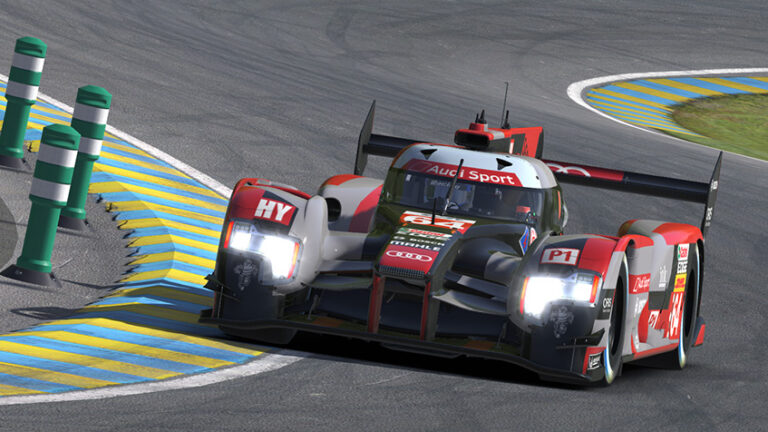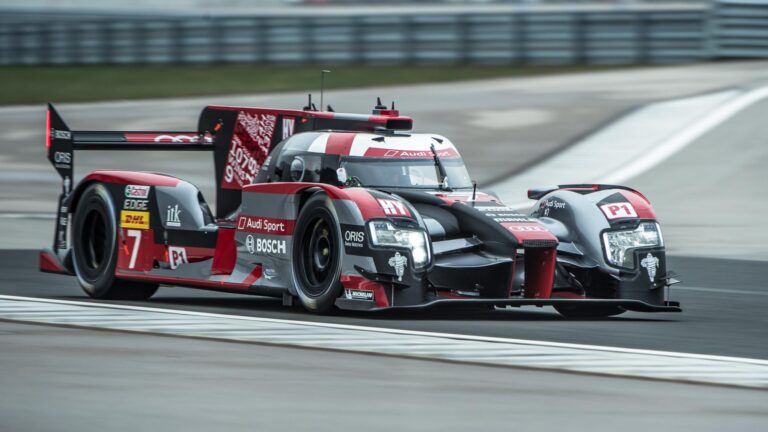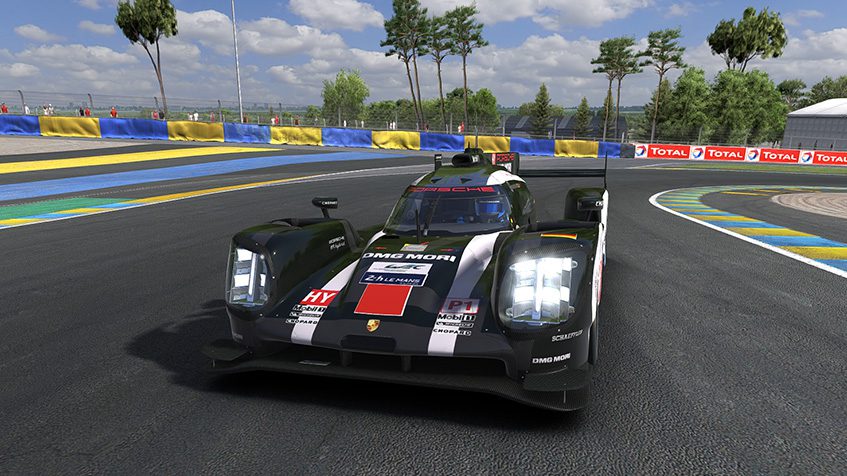
The Porsche 919 Hybrid iRacing rivalry with the Audi R18 e-tron quattro is the defining battle of the virtual LMP1 era. While both machines were designed under the same Volkswagen Group umbrella to conquer the 24 Hours of Le Mans, their engineering philosophies could not be more different. In the simulator, this translates to a “Gasoline vs. Diesel” showdown that forces drivers to choose between the aggressive, high-deployment strategy of the Porsche and the relentless, torque-heavy efficiency of the Audi.
Engine Philosophy: V4 Gasoline vs. V6 TDI
The core of the Porsche 919 Hybrid iRacing experience is its high-revving 2.0L V4 gasoline engine. It produces power in a traditional, high-RPM band, making it easier for drivers to shift “by ear” compared to the Audi. The Audi R18, however, utilizes a 4.0L V6 Turbocharged Direct Injection (TDI) diesel. The Audi offers a much broader torque curve, allowing it to “grunt” out of corners even if you are in the wrong gear. While the Porsche feels like a precision instrument, the Audi feels like a relentless freight train that never stops pulling.
Hybrid Systems: 8MJ Exhaust Recovery vs. KERS Flywheel
Technically, the Porsche 919 Hybrid iRacing model holds a significant advantage in energy harvesting. It is an 8-Megajoule (8MJ) class car that recovers energy from both the front axle (KERS) and the exhaust (MGU-H). This means the Porsche is constantly charging its battery whenever the engine is running. The Audi R18 only recovers energy under braking. In a single-lap qualifying scenario, the Porsche’s ability to deploy massive amounts of energy often makes it the faster car. However, in a long race, the Audi’s superior fuel efficiency and simpler energy management often allow it to reclaim the lead during the pit cycle.
Handling characteristics also vary wildly between the two titans:
- Porsche 919 Hybrid: Features a more “natural” handling balance that is smoother through high-speed technical sections. It boasts a legendary Traction Control system that allows drivers to be extremely aggressive with the throttle without fear of a snap-spin.
- Audi R18 e-tron: Known for being “tail-happy” under heavy trail-braking. It requires a more delicate touch to keep the rear stable, but it offers better visibility out of the cockpit, as the Porsche’s massive wheel arches can often block the view of the apex in tight left-handers.
The Battle of the Straights
On tracks with long straights like Le Mans or Monza, the Porsche 919 Hybrid iRacing model often struggles to keep its battery full when trying to maintain pace with the Audi. Because the Audi doesn’t rely as heavily on its hybrid boost for top speed, it can “walk away” from a Porsche that has exhausted its 8MJ allotment for the lap. To compete, Porsche drivers must master the art of “lift-and-coast” and tactical deployment, using the hybrid boost only where it provides the most significant lap-time gain rather than draining the battery on every straightaway.
Choosing Your Le Mans Legend
Deciding between the Porsche 919 Hybrid iRacing and the Audi R18 comes down to your personal driving style. If you prefer a car that feels like a surgical tool, with incredible cornering grip and a sophisticated energy recovery system that works even at full throttle, the Porsche is your machine. If you prefer the raw torque of a diesel engine and the challenge of managing a car that is “on the edge” under braking, the Audi is the choice. Regardless of which LMP1 titan you choose, you are driving the pinnacle of endurance history.