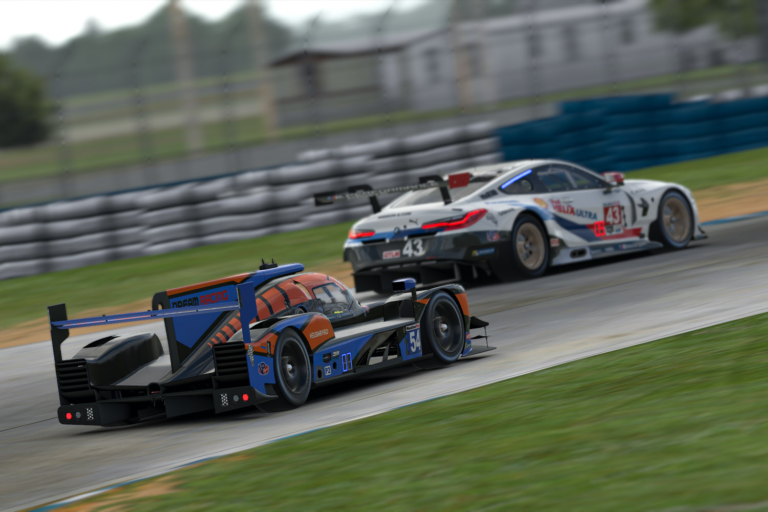
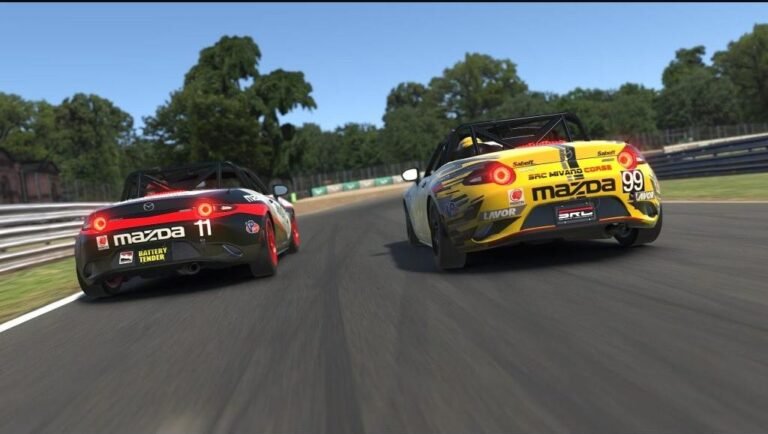
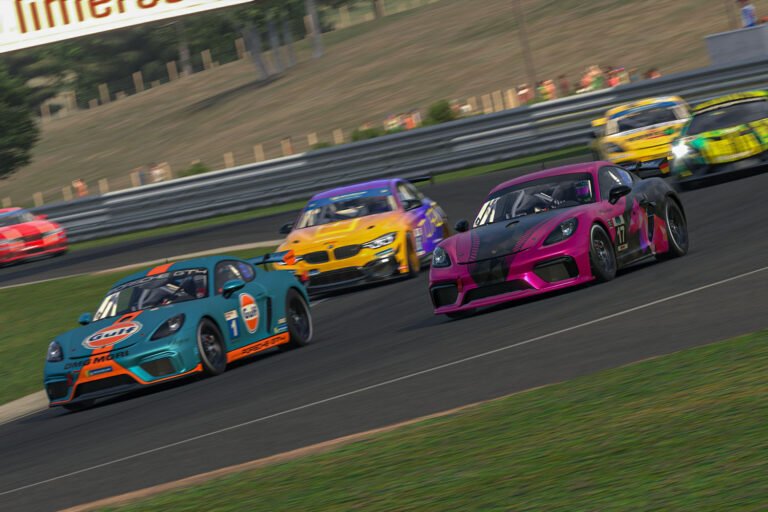
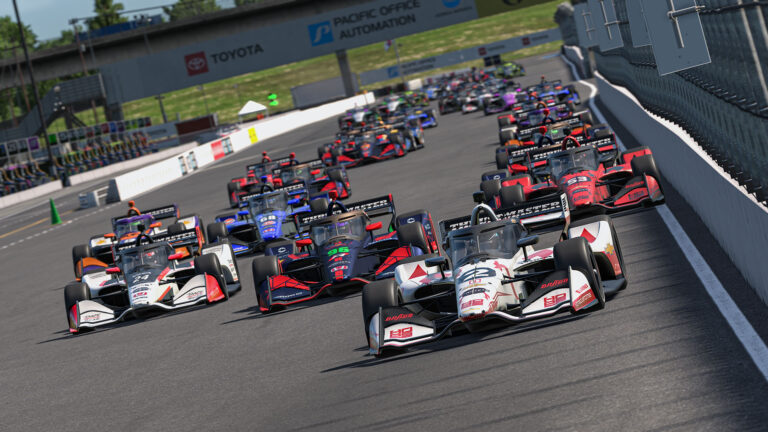
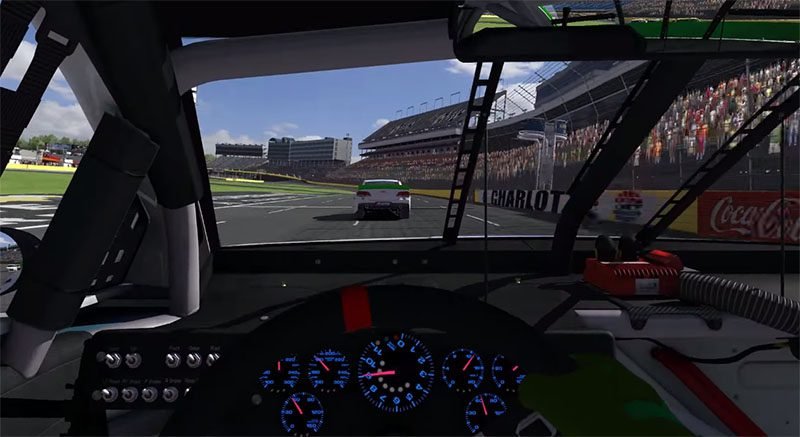
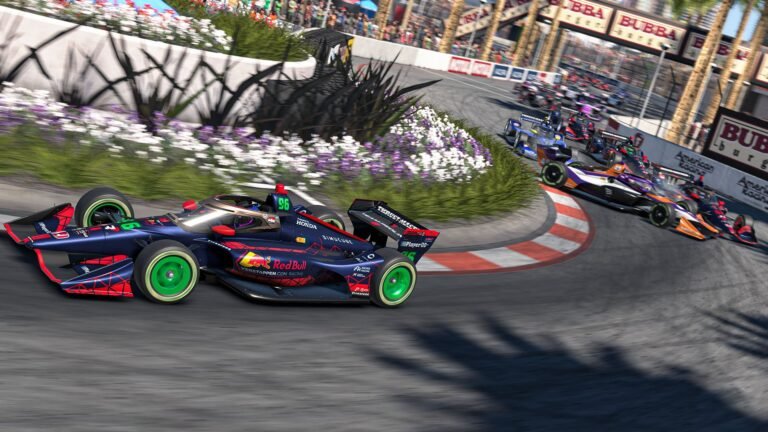
WeatherTech Raceway Laguna Seca has been in iRacing since the service launched to the public in 2008. For more than 17 years, sim racers have taken millions of laps through the Corkscrew. They have scrubbed speed on the blind left-hander, carried momentum through Turn 3, and chased lap times down the back section to Rainey Corner. The track is embedded in sim racing history. And for all those years, the physical track surface in iRacing was modeled from the same original scan data. That changes today. iRacing Season 3 2026 ships a complete, ground-up rebuild of Laguna Seca. New photogrammetry scan data powers the update, and it is the biggest upgrade the circuit has received since its debut.
Laguna Seca iRacing History
Laguna Seca was available on iRacing’s launch day, which makes it one of the service’s original tracks. Physically, the circuit opened in 1957 as a road course built by the Army Corps of Engineers. It sits on the grounds of what was then Fort Ord, near Monterey, California. In the decades since, it hosted the Can-Am, Trans-Am, IMSA Camel GT, CART, and every major North American road racing series at one point or another. The Corkscrew is one of the most replicated and discussed corners in all of motorsport. A sequence of blind, plunging corners at the top of a hill, it more closely resembles a ski slope than a piece of motorsport infrastructure.
In sim racing, Laguna Seca carries similar weight. It appeared in some form in nearly every major sim title released over the past three decades. The Corkscrew became a benchmark corner for evaluating both sim fidelity and driver skill. Its unusual geometry, memorization difficulty, and unique rhythm set it apart from almost any other corner in sim racing. Its presence in iRacing from day one meant that generations of sim racers learned the circuit on original scan data.
What the Rebuild Actually Means
iRacing has updated Laguna Seca’s artwork over the years, improving visual quality as rendering standards evolved. However, the physical surface model, which underpins how the track feels to drive, was never updated from the original scan. That original data was accurate for its time, however photogrammetry technology has advanced substantially since 2008. The new scan uses iRacing’s latest capture processes. These produce a higher-resolution model of the actual track surface, including its bumps, undulations, and texture variations.
Additionally, the rebuild adds fully 3D modeled physical curbs throughout the circuit. In the previous version, curbs were primarily visual elements. In the new version, they have physical geometry that your car responds to. This changes the ideal racing line in some sections. Even drivers with extensive laps on the old version will need to recalibrate.
The full rebuild also applies iRacing’s current artwork pipeline to the circuit. This includes updated track surface materials, revised trackside scenery, updated foliage, and lighting that matches current standards. The result looks and feels like a modern iRacing circuit, not an eighteen-year-old capture with incremental cosmetic updates.
The Corkscrew and Other Key Sections
The Corkscrew sits at the top of the track’s main hill, reached via a fast, uphill blast through Turns 5 and 6. The entry point is blind over the crest, the left-right sequence drops sharply away beneath the car, and the run-off is limited. It has always been among the most challenging corners in the sim. The Corkscrew should feel different to drive than the previous version. Updated surface data captures the real camber and texture variations more accurately. Physical curbs are now present at the apex of the left-hander.
Similarly, the high-speed Turn 3 sweeper and the Turn 9 Rainey Corner hairpin should benefit from the higher-resolution physical model. Both sections rely heavily on surface feel and mechanical grip. The updated data captures elevation changes more precisely throughout the circuit. This affects suspension loading in sections that may have felt flat in the old version.
Access and Pricing
Laguna Seca moved from free content to paid licensed content in September 2025. Anyone who purchased a license for the track since September 2025 receives the rebuilt Season 3 version automatically and for free. The previous version is retired. iRacing has noted that pending hosted sessions using the old track configuration were canceled. Organizers will not be charged for those sessions.
Members who were grandfathered into access when the track converted to paid content do not automatically receive the new version. Per iRacing’s release notes, those accounts will need to purchase a license to access the rebuilt track. This is consistent with how other similar transitions have been handled.
A Track That Deserved This
Laguna Seca is one of a small number of circuits whose reputation in sim racing genuinely matches its real-world status. The Corkscrew, in particular, is the kind of corner that leaves an impression on a driver the first time they get it right. The real circuit continues to host IMSA and World Superbike events at Mazda Raceway at Laguna Seca, unchanged. However, the way iRacing models it finally has, and after 17 years on the original scan data, that is a meaningful upgrade.
If you have laps banked on the old version, the new circuit deserves clean time in a test session before your next race. The surface data is different enough that muscle memory from the old scan may work against you. This is particularly true through the Corkscrew entry and around the physical curbs.